ARTICLE · 26 August 2026
Colombian Social Security contributors have multiplied by 3.7 since 2021: what it means for banking
From 94,265 to 347,467 contributors in five years. The Colombian community is now the second-largest foreign nationality in the Social Security system, and banks still serve it with generic products.
Latinos 360 Team
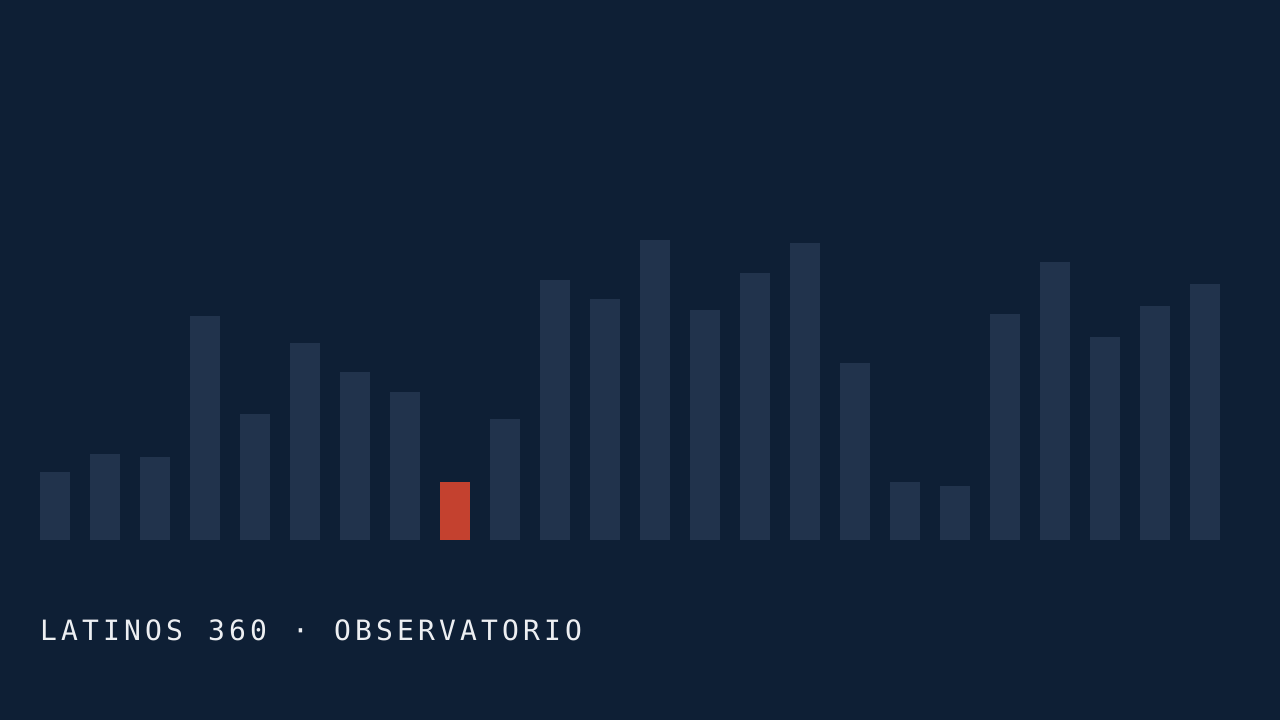
In July 2021 there were 94,265 Colombians contributing to Spain's Social Security system. By July 2026 there are 347,467: a 3.7-fold increase in five years and more than 253,000 new contributors. Only Morocco now outranks Colombia among affiliated foreign nationalities, and first-quarter 2026 arrivals — 38,600 Colombians, the top nationality in inflows according to the INE — suggest the curve has not yet flattened.
A banking customer, not a social niche
Every contributor is a payroll, and every payroll is a banking relationship. The Colombian who arrived in 2022 and contributes today follows a familiar financial sequence: basic account, remittance sending (Colombia receives more than €2 billion a year from Spain, 25% of what flows to the region), a first consumer loan and, on the horizon, a mortgage. That sequence almost always starts with the residence, registration and qualification-recognition procedures that Periódico Latino covers in its practical guides (in Spanish). The question no public dataset answers is at which bank each step happens — and what makes a customer switch.
Three implications for banks
First: acquisition costs are at a low. A community growing at double-digit annual rates opens tens of thousands of first accounts every year. Whoever captures the first payroll inherits the rest of the cycle.
Second: the remittance is the door, not the business. The transfer fee matters less than the relationship it builds. Fintechs have understood this; traditional banks still compete on price where they should compete on trust.
Third: the mortgage arrives earlier than the models say. With permanent contracts rising after the labour reform — 46.3% of jobs created since then have gone to foreign workers — the leap to home ownership is coming sooner than in previous migration waves.
What we will measure
From its first wave, the Latino 360 Barometer includes a financial-inclusion module: main bank, use of remittance providers, credit intention and perceived barriers. Aggregate results will be published in this Observatory.
Sources: Spanish Ministry of Inclusion, Social Security and Migration (July 2026); INE, Continuous Population Statistics (Q1 2026); Bank of Spain, Economic Bulletin 2025/Q2. Full series and CSV in the Latino market in figures.